
Engineered for Laboratory Performance
Our industrial air curtains are engineered for top laboratory performance. They create a high-velocity invisible barrier across doorways, blocking outdoor dust, humidity, and pests from entering clean spaces.



An Industrial Air Curtain creates a controlled airflow barrier across entrances and access points to reduce dust, insects, and airborne contaminants. Commonly used in laboratories and industrial facilities, it helps maintain environmental conditions, improve cleanliness standards, and support efficient climate control within controlled working areas.
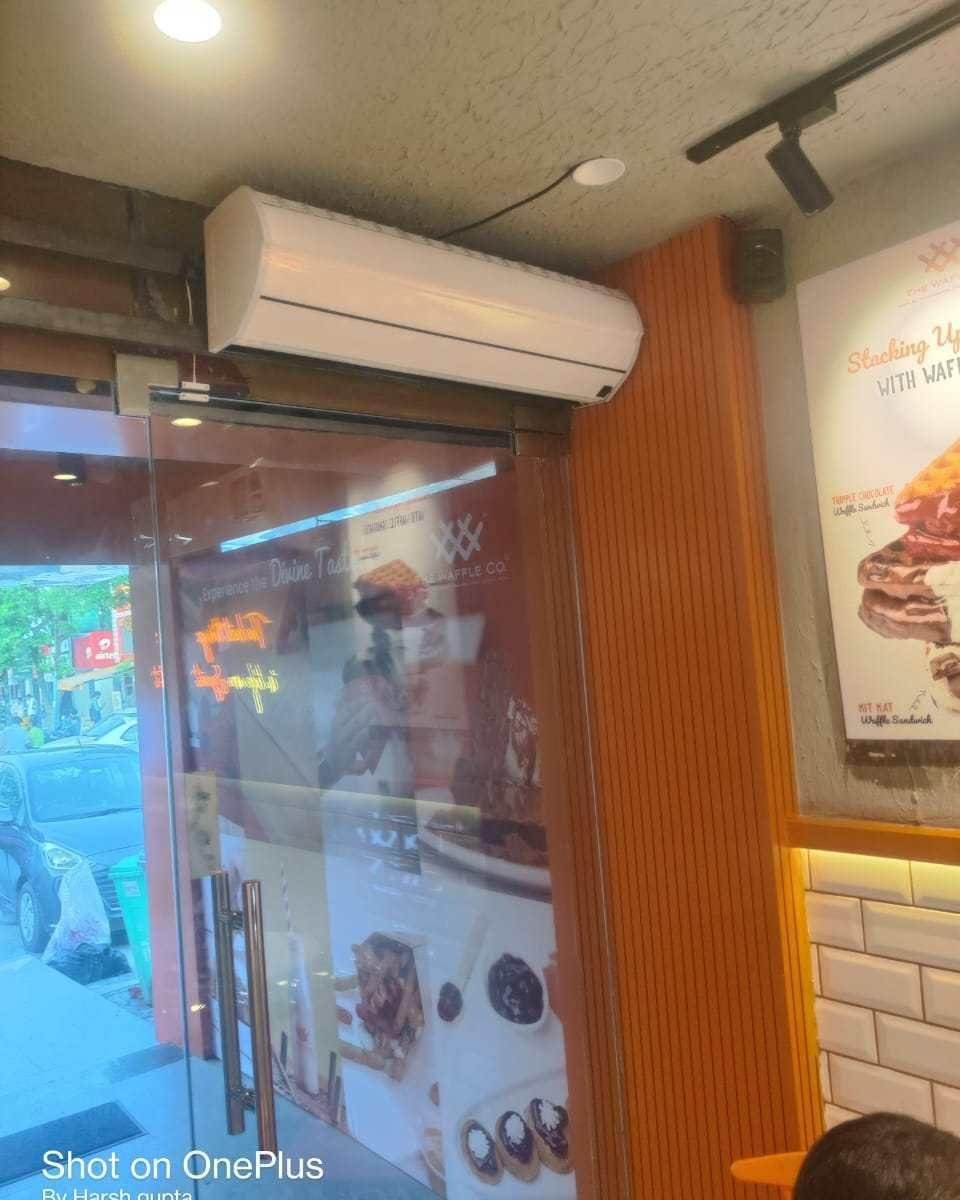
Our industrial air curtains are engineered for top laboratory performance. They create a high-velocity invisible barrier across doorways, blocking outdoor dust, humidity, and pests from entering clean spaces.
At Vilva Lab Furniture, we provide infrastructure that enhances your laboratory's daily operations. Our air curtains are built with durable, industrial-grade components to ensure long-term performance and reliability. Let us help you secure your lab environment today. Contact our team to learn more about our air curtain technology and implementation services.
It is a high-velocity fan-powered device mounted above laboratory or warehouse doorways that blows a continuous, downward stream of air to create an invisible barrier between separate climate zones.
By creating an efficient thermal barrier over open doorways, it minimizes HVAC heating or cooling losses by up to 80%, lowering facility utility expenses.
Yes, they feature multi-speed electronic controllers or automated variable-frequency drives (VFD) to adjust airflow velocity based on outdoor wind conditions.
It can be wired directly to an automated magnetic door limit switch or infrared motion sensor that turns the fan on instantly when the door opens.
They are manufactured in standard lengths matching standard commercial doors, spanning 900mm, 1200mm, 1500mm, and 1800mm, and can be mounted side-by-side for wide paths.
It prevents conditioned air loss, blocks flying insects, stops outdoor dust, and keeps external atmospheric contaminants from breaching sterile laboratory cleanrooms.
They are built using robust, corrosion-proof materials like hot-dip galvanized steel, powder-coated aluminum, or Type 304 stainless steel for long-term durability.
Modern air curtains utilize advanced, dynamically balanced centrifugal fans and acoustic lining insulation to keep noise levels well within safe industrial limits.
Unheated models rely purely on air velocity to block dust and insects, while heated models integrate electric coils or hot-water lines to add comfort in cold climates.
To maintain optimal velocity, the intake grilles and internal filters should be vacuumed or washed every 1 to 3 months, depending on local dust levels.