
Safe Distribution for Sensitive Research
Our professional laboratory gas lining ensures safe distribution for sensitive research. We install seamless, pressure-tested conduits that deliver high-purity gases to burner units without leakage risks.



Laboratory Gas Lining systems are designed to deliver controlled gas supply to workstations, analytical instruments, and testing equipment. Proper gas distribution helps laboratories maintain efficient workflows, improve operational reliability, support specialized testing procedures, and provide safe utility access for various scientific and industrial applications.
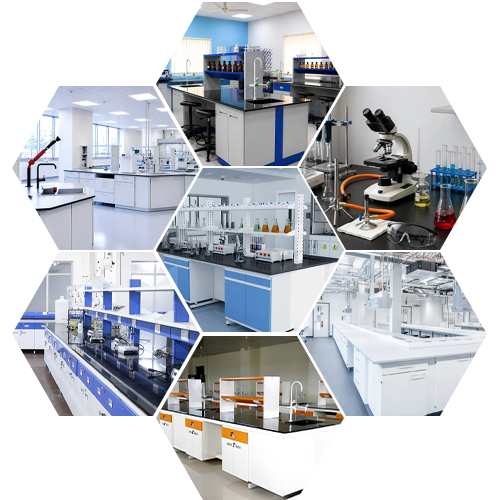
Our professional laboratory gas lining ensures safe distribution for sensitive research. We install seamless, pressure-tested conduits that deliver high-purity gases to burner units without leakage risks.
At Vilva Lab Furniture, we combine technical engineering with expert installation to provide a comprehensive gas delivery solution. We perform thorough pressure testing to ensure every connection is secure and ready for operation. Let us help you design a safer, more efficient gas infrastructure for your research facility. Contact our team to discuss your gas piping and distribution project.
It is a specialized network of high-purity tubing, pressure regulators, and control valves engineered to safely distribute gases like Nitrogen, Argon, Helium, Hydrogen, and Oxygen from gas cylinders to workbench outlets.
Systems undergo rigorous helium mass spectrometer leak testing during setup, and can integrate electronic pressure-drop alarms and gas-specific sensor sniffers.
A two-stage regulator delivers a constant, unchanging outlet pressure to your delicate analytical instruments, even as the gas level inside the main supply cylinder drops.
Outlets follow international color codes, such as blue for Nitrous Oxide, green for Oxygen, gray for Carbon Dioxide, and yellow for standard vacuum lines.
High-precision, quarter-turn fine control needle valves or ball valves are installed, often featuring clear lockable handles to prevent accidental gas release.
Medical-grade, orbitally welded Type 316L stainless steel tubing is the global standard, ensuring zero gas contamination and high pressure tolerance.
Orbital welding creates a completely seamless, smooth internal weld bead that eliminates pockets where moisture or particulate contaminants could collect.
They must be routed through completely independent, widely separated lines, and flammable lines must include inline flashback arrestors and automated shut-off solenoid valves.
For safety, cylinders should be secured outside the main working lab in dedicated, well-ventilated external gas cylinder cages or specialized fire-rated gas cabinets.
It should undergo a comprehensive nitrogen pressure-hold test every 12 months to verify the complete structural integrity of every joint and fitting.